Psychiatrist Dr. Franklin Maleson, who has lived in Chestnut Hill for 31 years (and before that, East Falls for 23 years) is rather modest considering his pioneering achievements as a U.S. Army doctor treating drug-addicted Vietnam War veterans in Fort Carson, Colorado. When I approached him recently about doing an interview for the Local, he replied, “I’m not a big-deal, famous person.”
“If we only wrote about big-deal famous people in the Local,” I replied, “we would have a lot of empty pages.”
That argument must have won him over because Maleson, who is 86 years old and …
This item is available in full to subscribers.
You can also purchase this individual item for $1.50
We have recently launched a new and improved website. To continue reading, you will need to either log into your subscriber account, or purchase a new subscription.
If you are a digital subscriber with an active subscription, then you already have an account here. Just reset your password if you've not yet logged in to your account on this new site.
If you are a current print subscriber, you can set up a free website account by clicking here.
Otherwise, click here to view your options for subscribing.
Please log in to continue |
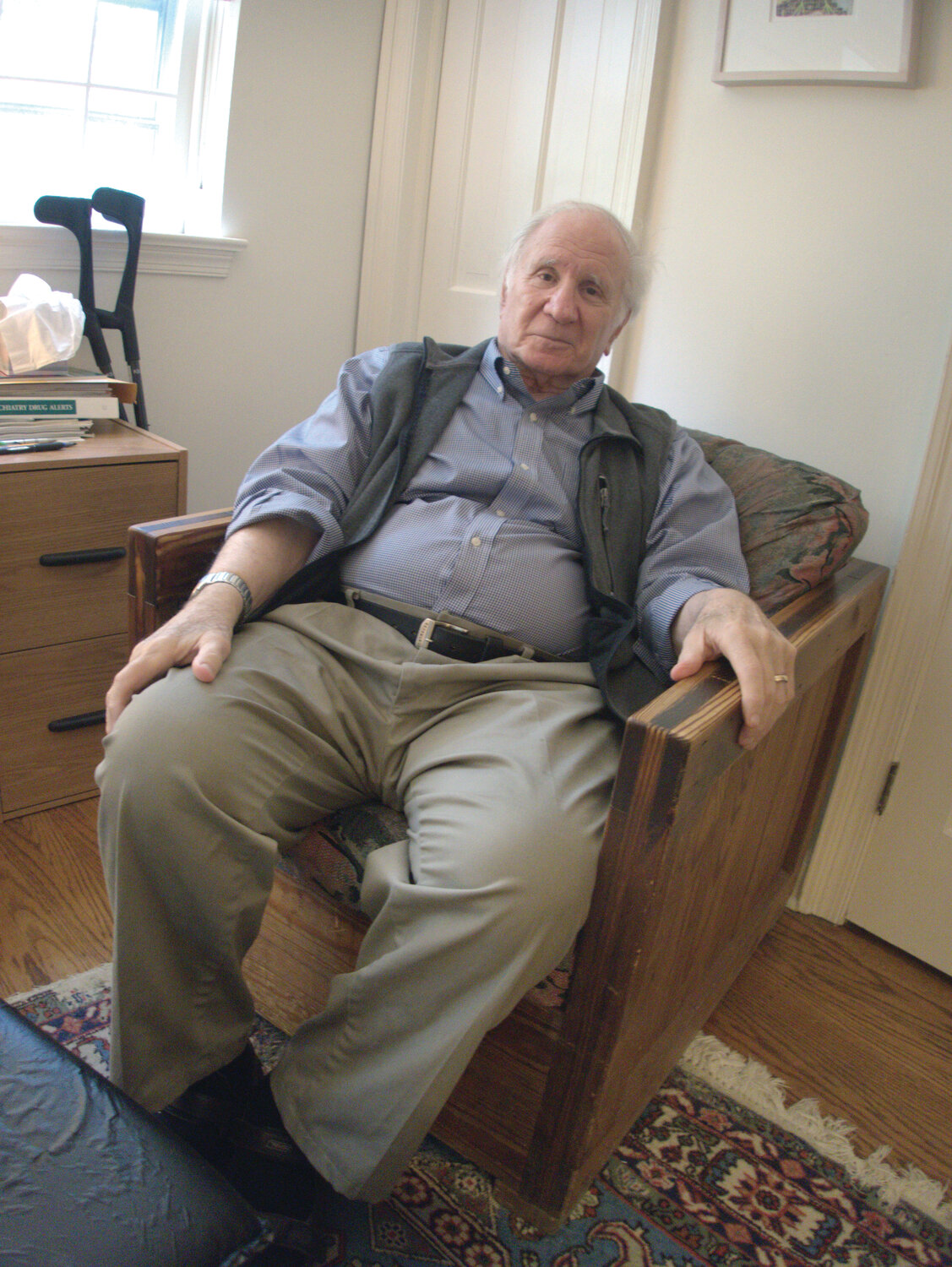


Psychiatrist Dr. Franklin Maleson, who has lived in Chestnut Hill for 31 years (and before that, East Falls for 23 years) is rather modest considering his pioneering achievements as a U.S. Army doctor treating drug-addicted Vietnam War veterans in Fort Carson, Colorado. When I approached him recently about doing an interview for the Local, he replied, “I’m not a big-deal, famous person.”
“If we only wrote about big-deal famous people in the Local,” I replied, “we would have a lot of empty pages.”
That argument must have won him over because Maleson, who is 86 years old and is still seeing patients, agreed to discuss his career.
“If you think that you can turn this into an interview, let’s do it,” he said, “before they carry me off to the nursing home.”
A West Oak Lane native whose family moved to Cheltenham after he graduated from Joseph Pennell School, he earned degrees from Cornell University and Jefferson Medical School. Maleson later taught at Harvard Medical School for one year and a psychotherapy course at Jefferson Medical School for 42 years.
“When we started treating Vietnam veterans, I was stunned that there was so much drug addiction,” Maleson said in his living room. “Many Vietnam vets used drugs to anesthetize themselves to combat PTSD. So I did a big research project on drug abuse. The numbers were staggering.
“I don’t mean to brag, but I was the only one doing this kind of research at the time. The base’s commanding officer, Gen. Bernard Rogers, who later became NATO’s Supreme Allied Commander, was an amazing person. He told me to establish the Army’s first drug abuse treatment and education center.
“We detoxed people on heroin with methadone and therapy. I think we did a lot of good. I had my 15 minutes of fame.”
(Because of his success in treating drug addicted patients, Maleson was interviewed by Life magazine, the New York Times, television’s Washington Week in Review and elsewhere before pursuing a career in academia and private practice.)
Although significant progress has been made over the years in the treatment of drug addicted military personnel, Maleson believes there has also been regrettable regression in recent years. “Insurance companies used to cover long-term psychotherapy for these patients but not anymore,” he said.
“There were abuses, no doubt, but a lot of good was done. Most of us do a lot of things that we don’t charge for. I’ve had an interesting career. I don’t know if the military still even has the drug treatment program we started, but the whole military has regressed.”
Maleson has published articles in major journals in his field on topics ranging from treating religious cultists to the meaning of masochism in psychoanalytic discourse. He is a training and supervising psychoanalyst at The Psychoanalytic Center of Philadelphia (PCOP), a nonprofit organization dedicated to the study, practice and teaching of psychoanalysis and psychotherapy.
“I am especially proud,” he said, “of having served for over 25 years as the chairman of the ethics committee at PCOP teaching ethics and adjudicating complaints of misconduct and also serving nationally and internationally in ethics matters. I’ve worked very, very hard, but I also consider myself very lucky.”
Most of us are familiar with the classic model of psychoanalysis, originated by Sigmund Freud, in which the patient lies on a couch, not facing the therapist, while revealing his/her innermost thoughts and feelings. Freud wrote that this model was “the remnant of the hypnotic method out of which psychoanalysis was evolved.”
Over the years there has been much criticism of this method because the treatment can go on for months or even years and becomes extremely expensive and, in a way, even psychologically addictive.
“Today there is much less of patients lying on a couch,” said Maleson (although he does have the couch), “but it can be very helpful for the patient to say anything that comes to mind. A very useful way for some patients to help them understand how the past influences the present. People make life choices they don’t understand, or there may be pain they don’t understand.”
Any other examples of how the practice of psychiatry has changed over the years?
“Years ago we tried the experimental use of lithium to treat bipolar disease (then called manic depression),” he said, “and there was amazing improvement. However, although low-dose lithium is still used, lithium is not now the drug of choice, partly because we discovered that it may cause kidney damage. But we now have effective anti-psychotic medicines we can use instead. … I have a varied practice. Some therapy, some psychoanalysis, some medical management.”
Maleson has been married for 63 years to his wife, Diane, a retired law school professor whom he met on a blind date.
For more information, call 215-821-9941. Len Lear can be reached at lenlear@chestnuthilllocal.com.



