Now running at Old Academy Players, “Driving Miss Daisy” (1987) by Alfred Uhry was warmly received on opening night. Co-directed by Carla Childs and Vanessa Ballard, the show is set in Georgia between 1948 and 1973 and gathers strength from performances in the core roles.
Most know “Miss Daisy” from the movie version that won the Best Picture Oscar in 1989. Previously, it debuted Off-Broadway two years before, winning the Pulitzer Prize. Uhry based the script on memories of his Jewish grandmother. It was one of the plays in his Atlanta Trilogy that deals with virulent antisemitism …
This item is available in full to subscribers.
You can also purchase this individual item for $1.50
We have recently launched a new and improved website. To continue reading, you will need to either log into your subscriber account, or purchase a new subscription.
If you are a digital subscriber with an active subscription, then you already have an account here. Just reset your password if you've not yet logged in to your account on this new site.
If you are a current print subscriber, you can set up a free website account by clicking here.
Otherwise, click here to view your options for subscribing.
Please log in to continue |

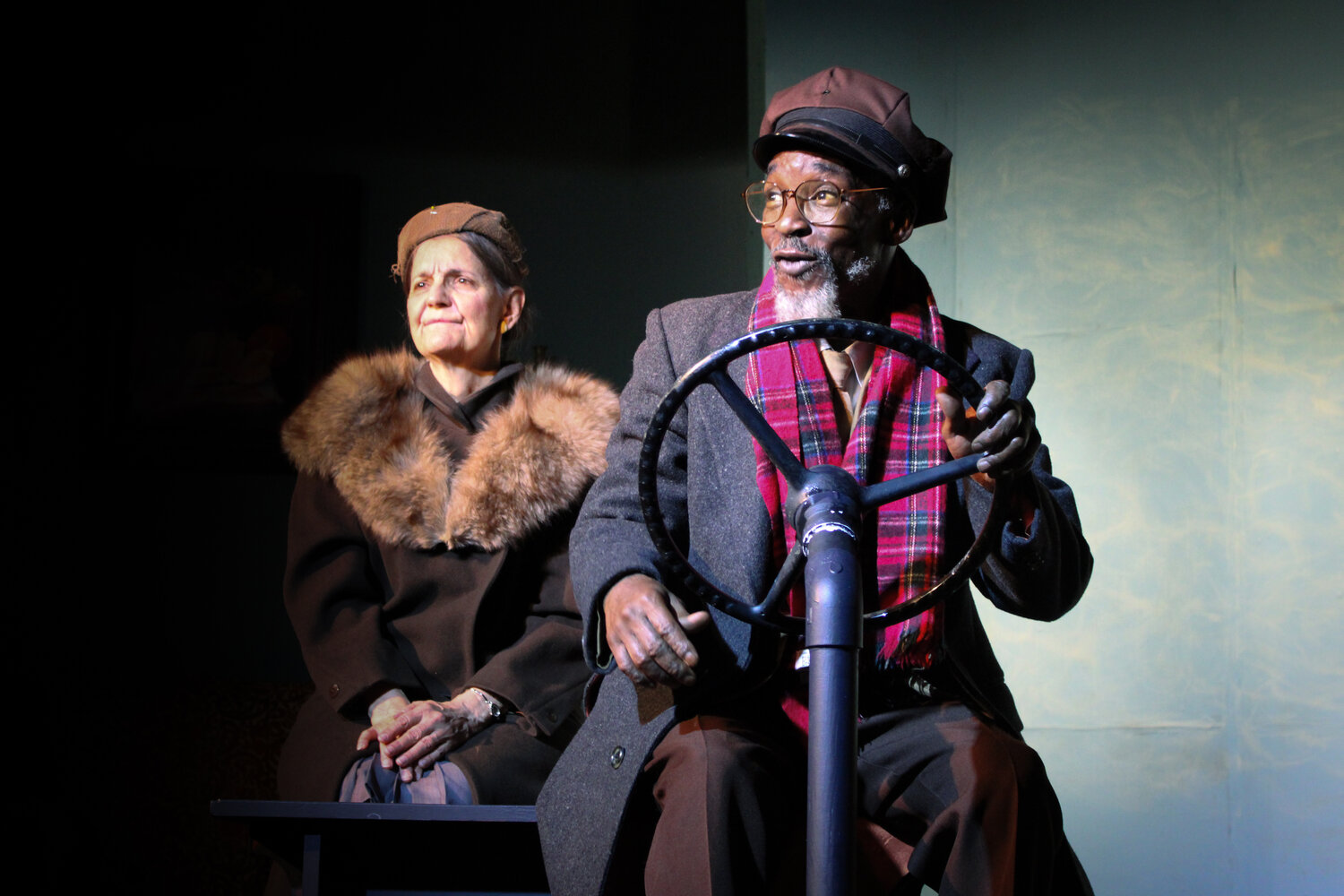
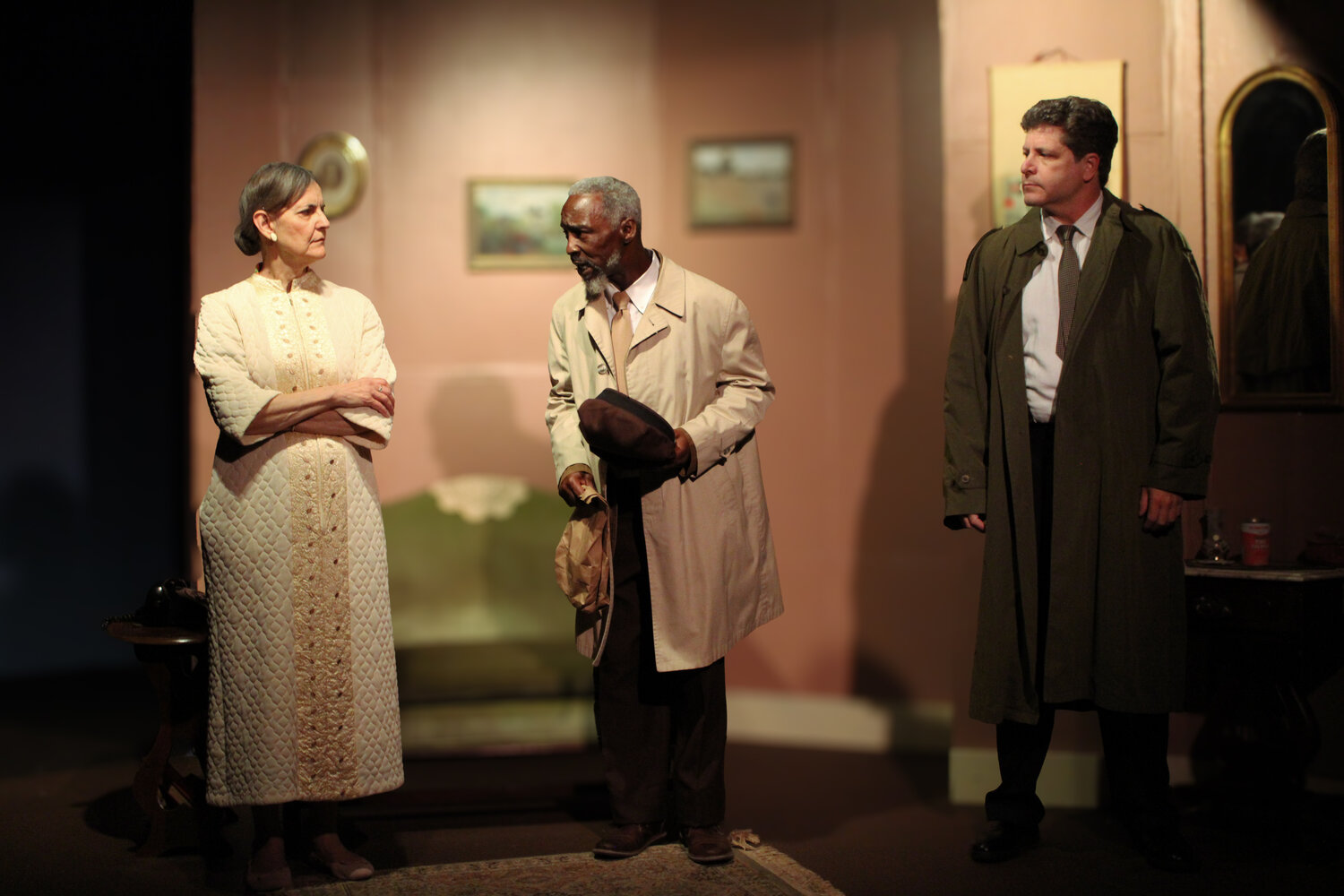


Now running at Old Academy Players, “Driving Miss Daisy” (1987) by Alfred Uhry was warmly received on opening night. Co-directed by Carla Childs and Vanessa Ballard, the show is set in Georgia between 1948 and 1973 and gathers strength from performances in the core roles.
Most know “Miss Daisy” from the movie version that won the Best Picture Oscar in 1989. Previously, it debuted Off-Broadway two years before, winning the Pulitzer Prize. Uhry based the script on memories of his Jewish grandmother. It was one of the plays in his Atlanta Trilogy that deals with virulent antisemitism in the South.
Uhry addressed this problem most directly in the musical “Parade” (1998). In 1913, Jewish American Leo Frank was falsely accused of the rape/murder of a young woman in the basement of an Atlanta factory and was later lynched. In “Daisy,” a synagogue is firebombed. But in this drama the antisemitic issue is coupled with the broader problem of white racism.
The show opens with the sound of an off-stage car crash. Miss Daisy has just put her vehicle through the garage door. A crusty aging woman, Daisy denies her decline. Her son Boolie pleads with her to accept the services of a chauffeur. But Daisy rebuffs him, saying, “This is my house.”
Over her objections, Boolie hires a middle-aged Black man, Hoke, as her chauffeur. Hoke struggles to win acceptance, until prideful Daisy finally allows him to drive her to the Piggly Wiggly supermarket and to the synagogue. You then watch their relationship mature over time.
You reach the end of Act One before you even sniff the scent of Atlanta’s prevailing bigotry. Hoke stops the car and is openly angry because he has to explain to Daisy that he could not use the “whites only” bathroom at the gas station. It had been “Yassum” all along, but this time Hoke snaps, “I ain’t no child. I ain’t no dog.”
Sarah Swearer’s set design takes you in and out of Hoke’s car. In the stage play, you hear about other characters. Idella is Daisy’s black cook and maid; Boolie’s wife, Florine, is anxious to fit in with the prevailing social mores. But only three characters appear on stage, giving “Daisy” a tight, domestic drama feel.
Strong acting rescues characters on the edge of stereotype. Susan Blair shines as Daisy, a cantankerous 72-year-old determined to stay in full control. Daisy bends to reality, but Blair is careful not to yield too easily. Over 25 years, we see Daisy’s character evolve, partly in response to events in Atlanta.
As Hoke, Kareem Diallo Carpenter is an endearing physical presence. Given the social landscape, Hoke’s entire life has required him to “read the room” and act out a winning survival response. With impeccable comic timing, Carpenter’s Hoke is equally accommodating and wily. While Daisy has a character arc, Hoke, for the most part, only reveals who he is.
Michael Tarringer plays Boolie, the dutiful son, to perfection. Boolie is careful to keep a safe distance from Daisy’s emerging sympathy with Dr. Martin Luther King Jr. because he has business associates to please, as well as a worried wife at home.
Today, productions of “Driving Miss Daisy” are infrequent. The play made a splash 40 years ago, but much has changed. Some might consider the Jewish-Black alliance of the civil rights era a thing of the past; the discussion of bigotry has broadened, and today, politicos cynically manipulate the public’s confused anger. The Old Academy production is partly a heartwarming domestic drama, partly a historical artifact.
Old Academy is located at 3544 Indian Queen Lane. “Driving Miss Daisy” runs through June 28. Tickets are available at 215-843-1109.



