


Researchers have found unhealthy salt levels in the Wissahickon watershed ahead of the winter season, when municipalities and others use road salt as a safety precaution in icy conditions.
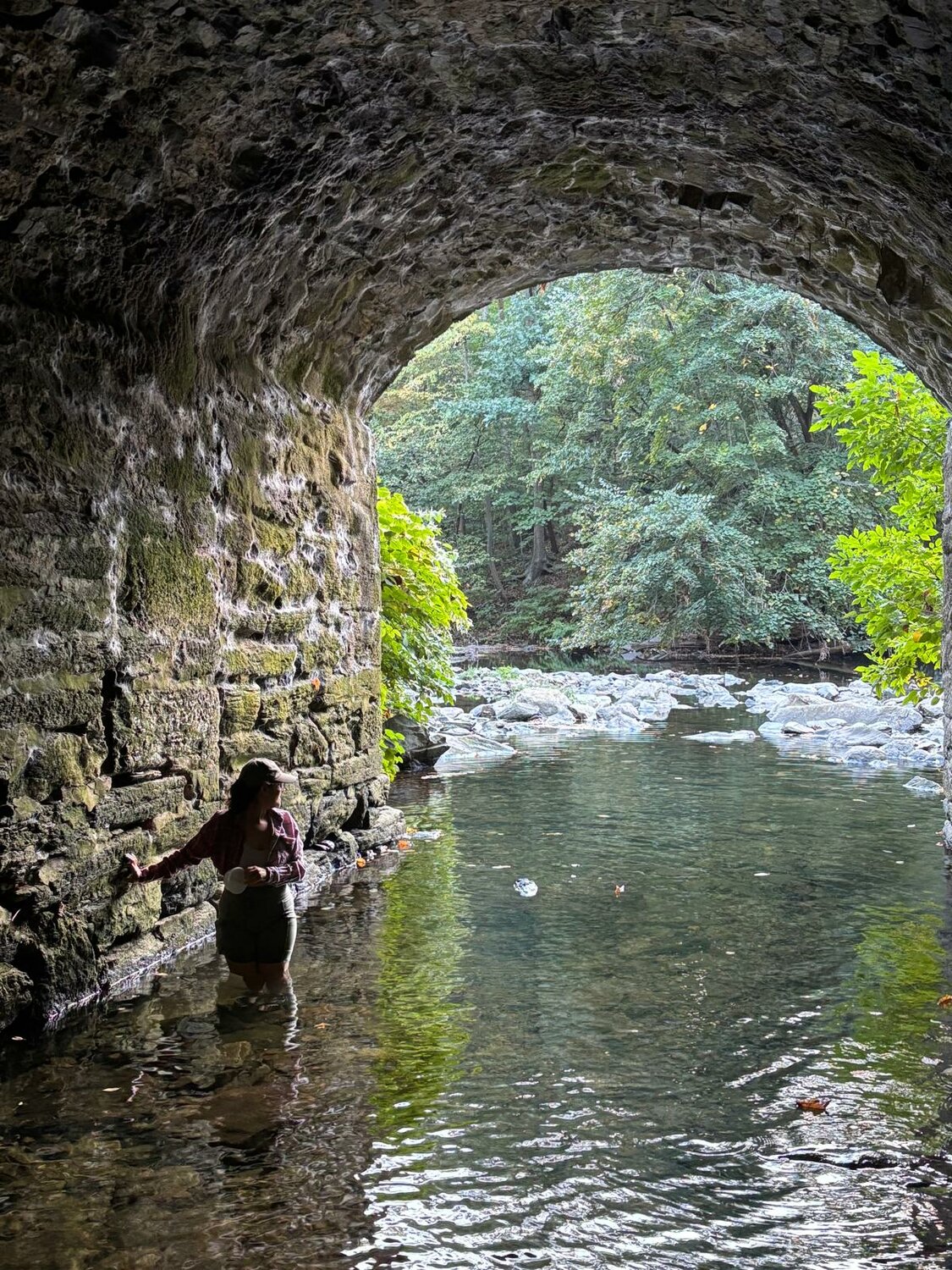
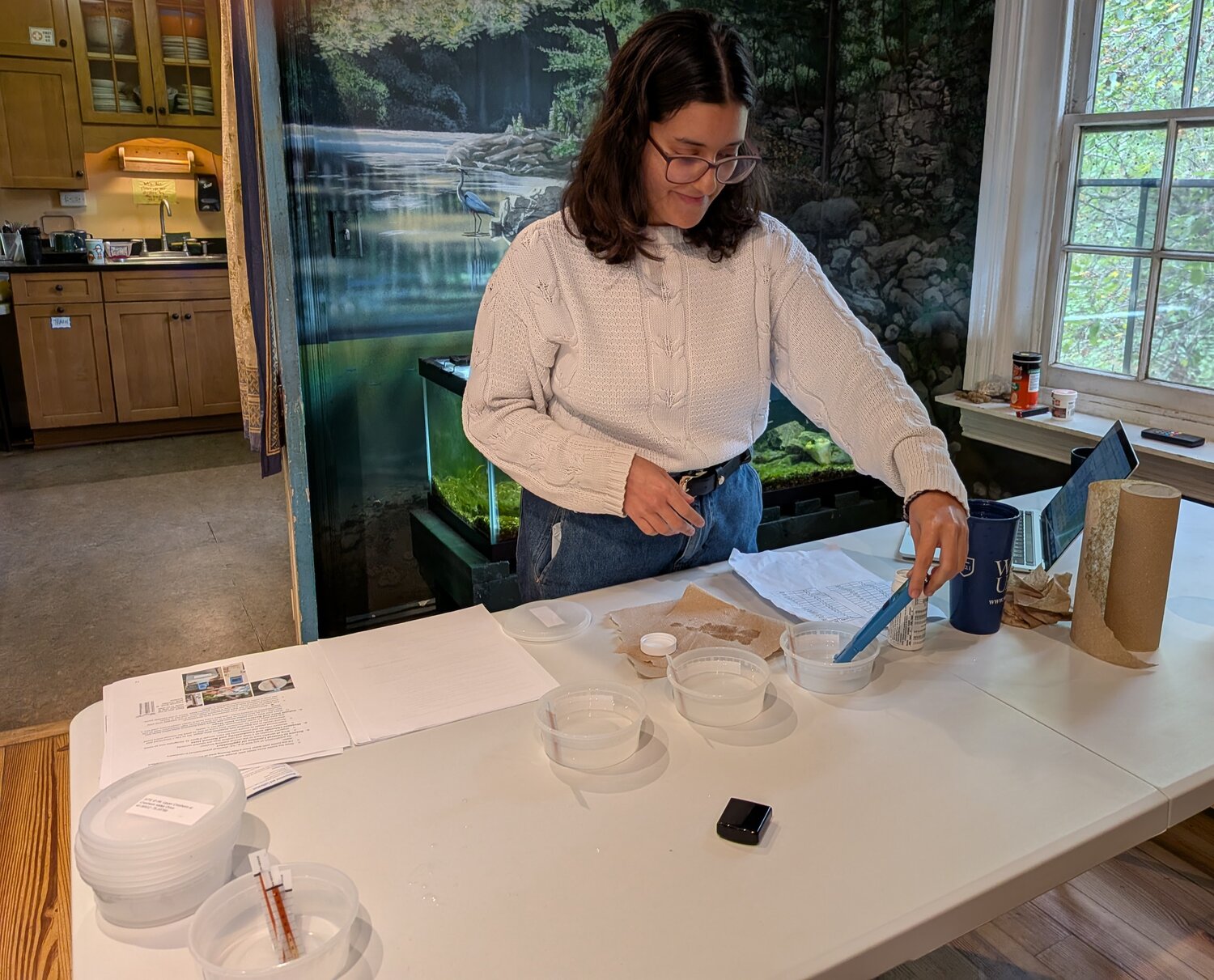
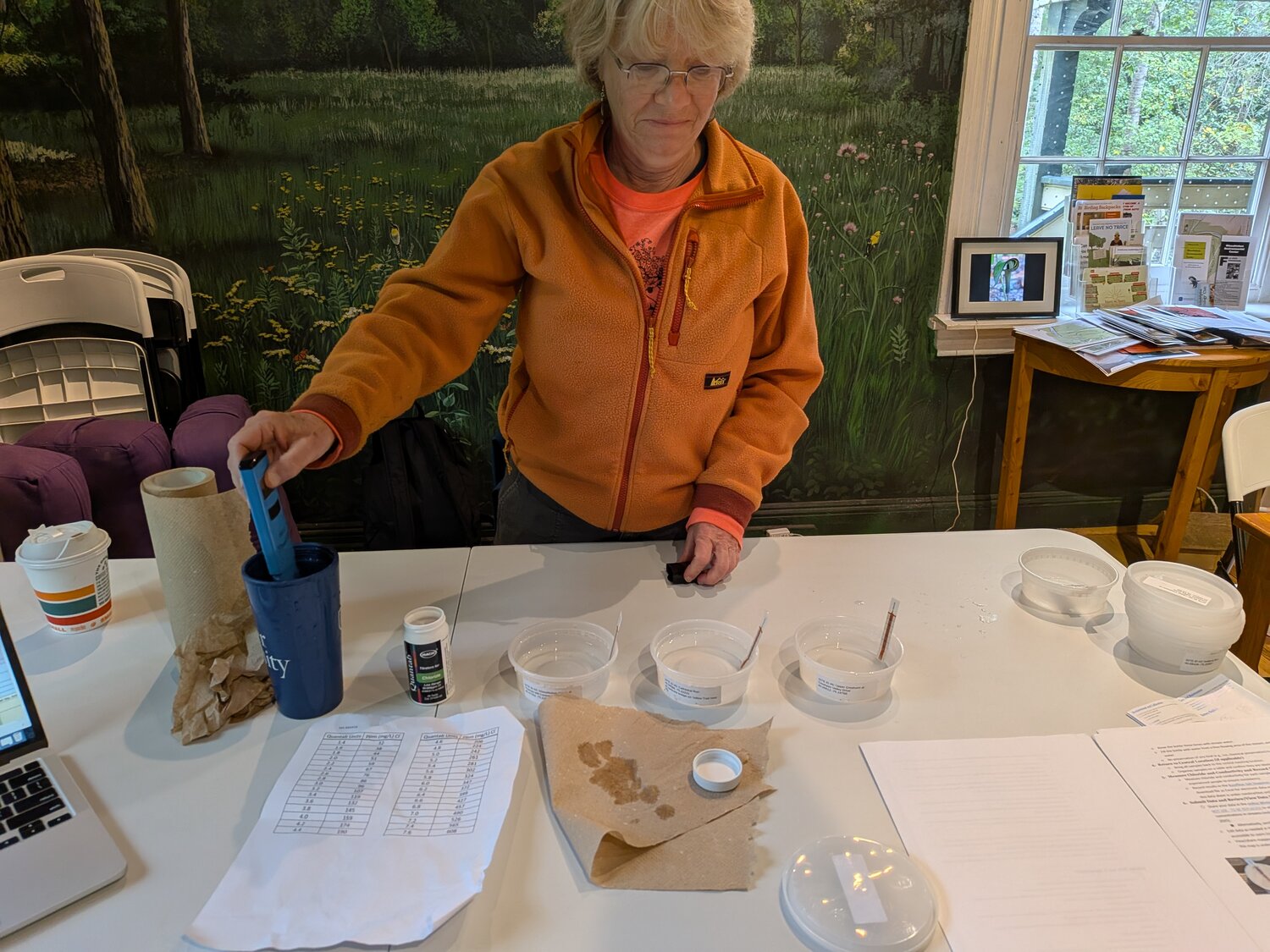
From Oct. 1-15, staff members and volunteers with the Wissahickon Environmental Center (WEC), Friends of the Wissahickon (FOW) and the Penn State Cooperative Extension’s Master Watershed Stewards program (MWS) collected water samples from 28 sites as part of the Stroud Water Research Center’s Fall Salt Snapshot study, a multi-state project that monitored the impact of road salt pollution on local waterways.
The chloride from heavy amounts of road salt flows into streams, rivers and creeks, affecting organisms that feed aquatic animals, Bob Wendelgass of Watershed Stewards said in a Dec. 5 news release.
“It has a negative impact on wildlife. It has a negative impact on infrastructure. It has a negative impact on our drinking water. It’s a problem,” Wendelgass, the former president of Clean Water Action, told the Local.
The amount of chloride from all sites tested in the Wissahickon exceeded Maryland’s and Ohio’s chronic toxicity level of 50 milligrams per liter, the study found. This level of chloride is considered a biological stressor to freshwater aquatic life in those states. Twenty-one sites surpassed the 120 mg/L threshold set in Canada, and one spot in Upper Gorgas Run nearly reached the U.S. Environmental Protection Agency’s (EPA) threshold of 230 mg/L.
The Stroud Water Research Center, an organization in Chester County that researches and advocates for freshwater systems, held the citizen-based study in October to see how much chloride remains in waterways long after road salt is applied. The project specifically tested the contamination of groundwater, where salt can accumulate and remain for many years.
“People think it’s just a winter issue, and we knew from the science that, no, the contamination of the groundwater and the streams is a year-round issue,” said John Jackson, a senior research scientist at the Stroud Center.
Studying road salt
Americans use 15-32 million metric tons of salt on roads, highways, sidewalks, public transportation, parking lots and driveways every year, which is double the amount used in 1975, according to Penn State Extension. And that means more salt is washing up in freshwater systems.
In Northwest Philadelphia, researchers found chloride levels in the Schuylkill River increased significantly during the early 1990s. From 1996-2010, researchers at the Stroud Center recorded increases in electrical conductivity at 15 out of 19 sites at the Schuylkill River. Jackson, who helped compile the data, attributed this to road salt usage.
“That was like an ‘Aha!’ moment. This road salt thing is really happening right before our eyes,” he said.
The Stroud Center conducted a Winter Salt Snapshot study in January and recruited more than 300 volunteers to collect water samples.
“What we’re doing with the snapshot is really trying to engage people in their backyards, people in their own watersheds…because the application of road salt is really a very local decision. It’s driven primarily by municipalities, by private landowners [and] private applicators,” said Jackson.
For the October study, 75 groups and more than 700 participants collected water samples across Pennsylvania, New York, New Jersey and Delaware, Jackson said in a presentation for the Stroud Center in November.
They collected samples during baseflow conditions, which is when the water in the stream is stable and largely supplied by groundwater, not storm runoff. That means minimal influence from winter storms and road salting. Researchers then measured the amount of chloride and electrical conductivity in the water.
Salt levels were higher in January. But in the fall, 61% of the 1,134 sites exceeded Maryland and Ohio’s chronic toxicity level and 5% passed the EPA’s standards set in 1988, Jackson said.
The chloride levels found in the Wissahickon Creek were five to 10 times higher than the natural amount in the region, which should lie between 5 to 20 mg/L, David Bressler of Stroud Center said in the Watershed Stewards release.
“What this showed is there are the levels of salt in the Wissahickon Creek, even without winter salting conditions,” said Wissahickon Environmental Center educator Susan Haidar, who helped test the water samples for the study.
The impact and uncertain future of road salt
Jackson said the salt load is contributing to the decline of certain aquatic species, such as stoneflies and mayflies. These insects feed fish and other wildlife in the Wissahickon. But when salt levels reach a certain point, it can rapidly dehydrate the insects.
It also threatens infrastructure. Road salt can corrode vehicles, roads and bridges, as metal and concrete exposed to road salt ages faster than normal, Jackson said. In the United States, this results in about $5 billion in repairs every year, according to the EPA.
The goal of the Stroud Center’s studies isn’t to get people to stop using road salt, but to reduce the amount used until there’s a long-term solution, Jackson said.
“It’s a challenge for them. People have demanded that the roads be clear. It was a very inexpensive, not labor-intensive solution to ice and snow. It was done with the best of intentions. It keeps the economy going. It provides safety (and) convenience,” he said.
Philadelphia Streets Department and PennDOT have been applying a type of saltwater solution called brine on the roadways before storms to reduce their salt use. The Local has reached out to the Streets Department to ask about its effectiveness. New York and Maryland have managed to reduce their salt usage with brine and other alternatives.
In the December release, WEC, FOW and MWS urged the public, municipalities and private contractors to reduce excessive salt use this winter.
“We’re not saying people should stop using salt. We’re saying if people use salt, they should use it judiciously and reduce the amount that they’re using. Don’t use it as an alternative to shoveling. Shoveling should be the first defense,” Wendelgass said.
For homeowners, Haidar recommends applying salt to the driveway and sidewalks when there’s little snow on the ground and sweeping up excess salt after a storm. Residents only need to apply a 12-ounce cup of salt to de-ice 10 sidewalk squares and a 20-foot driveway, according to the conservation organization Izaak Walton League of America.
The Stroud Center and many of its partners, including WEC, FOW and MWS, plan to conduct another snapshot next month. There will be an opportunity for people to register for the winter snapshot that month, Jackson said. The center’s goal is to continue to expand the number of sites tested and increase public awareness about road salt pollution, Jackson said.
“But the funny thing is over the last several years, as we’ve done more and more outreach to the public, nobody is surprised,” Jackson said. “They see the trucks going by and wonder ‘That’s got to be a problem,’ but no one told them it was.”
Abby Weiss is an environmental reporter for the Local and a Report for America corps member. She can be reached at abby@chestnuthilllocal.com.



