Susan Gillette Meer was familiar with the Daughters of the American Revolution (DAR) through her grandmother, who joined in 1938. Wanting to follow in her grandmother’s footsteps, Gillette Meer decided to become a member of the nonprofit women’s service organization. However, she assumed she’d never partake in the group’s initiatives.
“Honestly, I thought ‘I’ll never do anything with this group,’” Gillette Meer said. “I can’t really identify with them. I’m young and I pictured them as older women who sat around and drank tea. That wasn’t me.”
However, after …
This item is available in full to subscribers.
You can also purchase this individual item for $1.50
We have recently launched a new and improved website. To continue reading, you will need to either log into your subscriber account, or purchase a new subscription.
If you are a digital subscriber with an active subscription, then you already have an account here. Just reset your password if you've not yet logged in to your account on this new site.
If you are a current print subscriber, you can set up a free website account by clicking here.
Otherwise, click here to view your options for subscribing.
Please log in to continue |

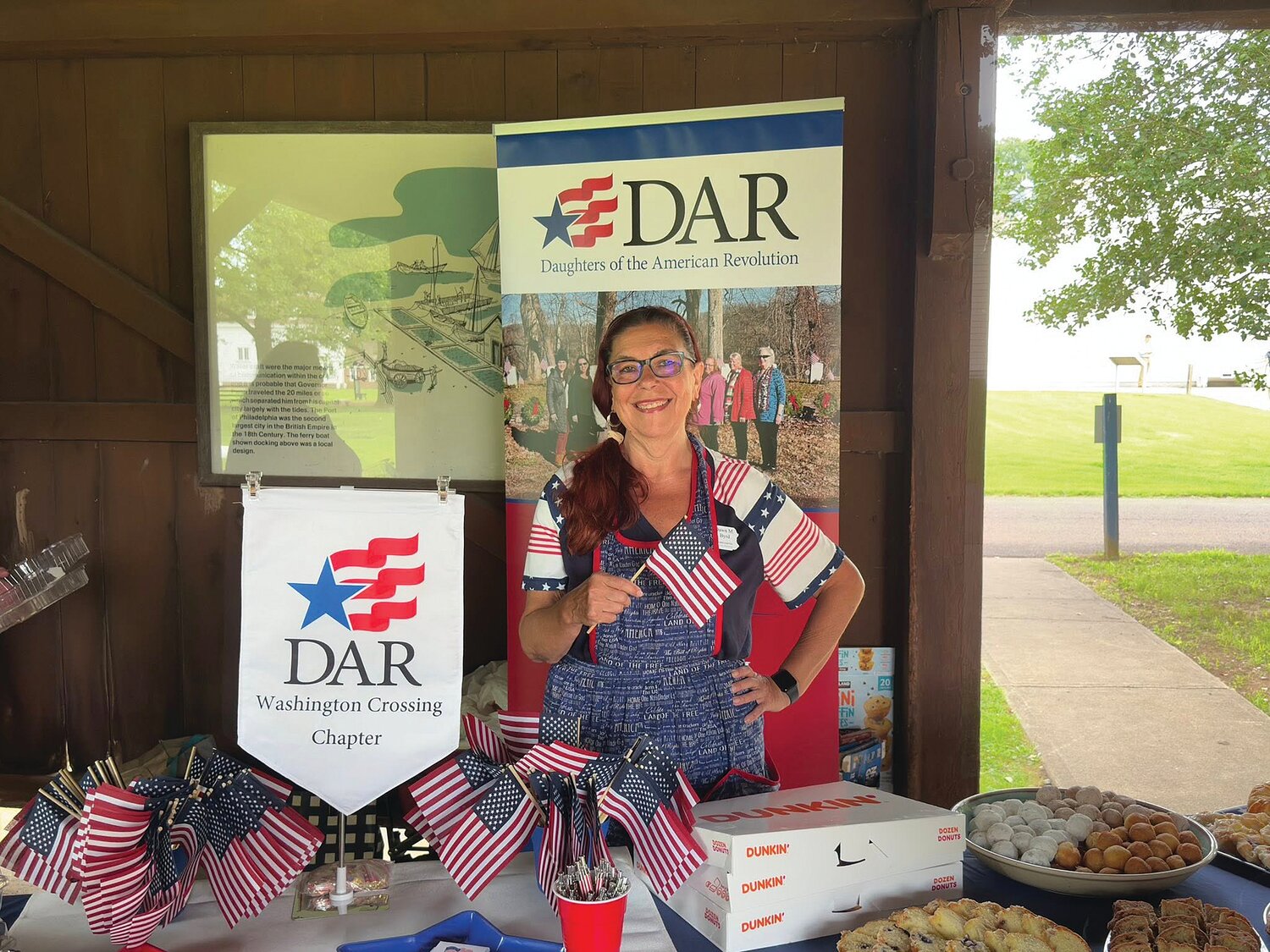
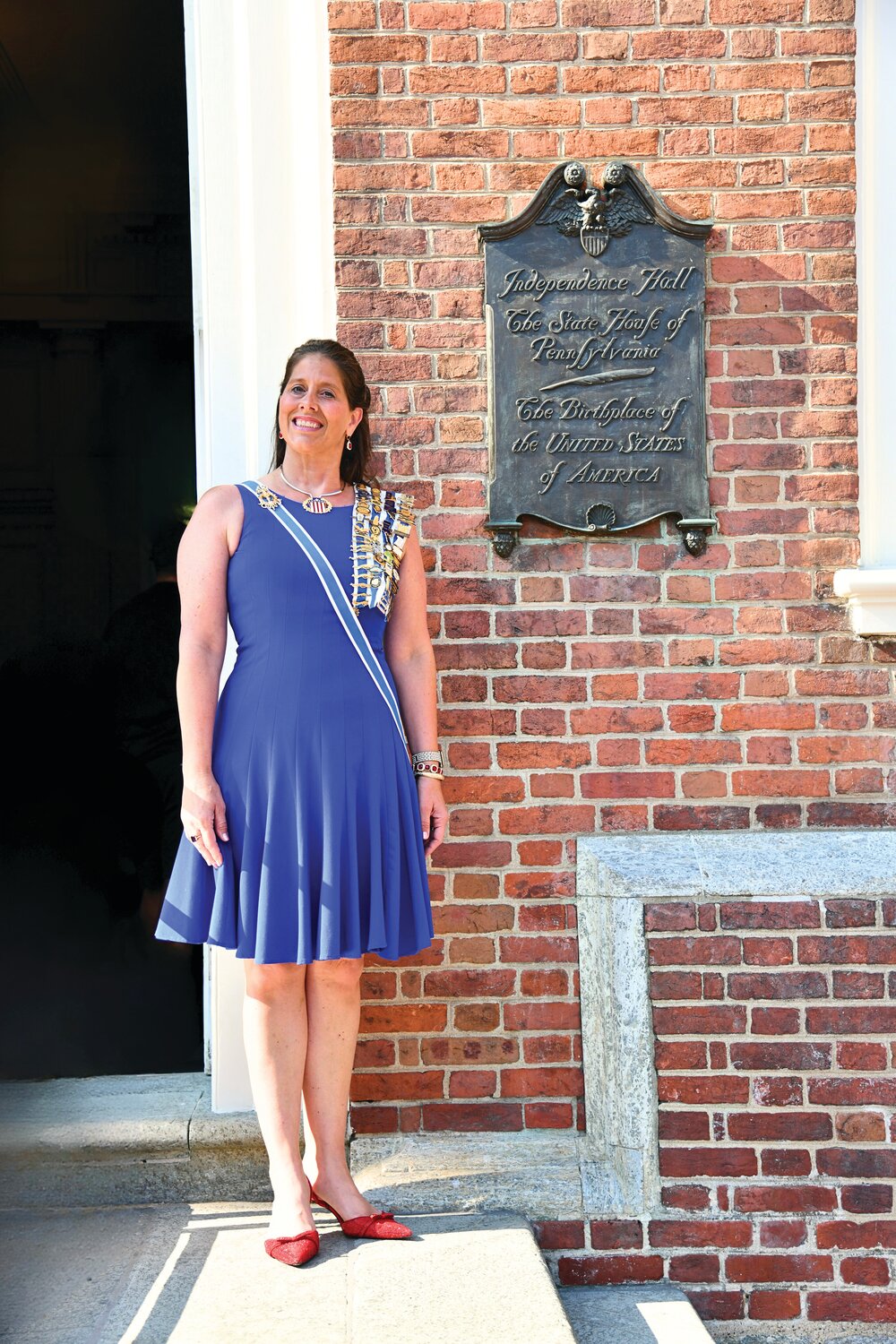


Susan Gillette Meer was familiar with the Daughters of the American Revolution (DAR) through her grandmother, who joined in 1938. Wanting to follow in her grandmother’s footsteps, Gillette Meer decided to become a member of the nonprofit women’s service organization. However, she assumed she’d never partake in the group’s initiatives.
“Honestly, I thought ‘I’ll never do anything with this group,’” Gillette Meer said. “I can’t really identify with them. I’m young and I pictured them as older women who sat around and drank tea. That wasn’t me.”
However, after attending a meeting, Gillette Meer “fell in love” with the service and educational components of the organization. She now serves as the state regent of the Pennsylvania State Society for DAR.
For an organization founded in 1890, it is common for there to be preconceived notions. However, Gillette Meer and other DAR members are eager to dispel negative ideas.
“One thing that we do say in DAR is, ‘It’s not your grandmother’s DAR,’” Gillette Meer said. “I always tell our women, ‘We need to stop letting the past of the DAR tell our story. We need to tell our story today.’”
In 2026, DAR is celebrating the country’s 250th anniversary with a focus on historic preservation, education, and patriotism.
Membership in DAR
Membership in DAR is open to any woman 18 years of age or older who can prove genealogical descent from a patriot of the American Revolution. Headquartered in Washington, D.C., the organization has nearly 190,000 members in 3,000 chapters across the country, as well as several international chapters. More than one million women have joined DAR since it was founded.
According to Christyn Olmstead, state vice regent for Pennsylvania and the Valley Forge chapter registrar, DAR’s strength is the various backgrounds from which its members come.
“DAR is such a great dynamic organization of independent, intelligent, wonderful, diverse women,” Olmstead said. “We’re single parents, married, divorced, have a career, stay at home. We have doctors, lawyers, educators. It’s just a wonderful group of women.”
In 1939, DAR (which was entirely white at the time) barred African-American singer Marian Anderson from using its concert hall at Constitution Hall. Instead, Anderson performed on the steps of the Lincoln Memorial, in what became a pivotal moment in the fight for civil rights. Shortly thereafter, DAR welcomed Anderson back to Constitution Hall and apologized. DAR has since paid honor to Anderson’s legacy through commemorative stamps, scholarships, and tribute concerts.
“Our organization truly wishes that history could be rewritten, but knowing that it cannot, we are proud to note that DAR has learned from the past,” the DAR website reads.
According to Susanne Johnston, southeastern district director for the Pennsylvania State Society of DAR, this incident casts a shadow over the organization’s history, but it is not reflective of the group today.
“We do have members in our chapters that are Black and Asian. It’s nonpolitical and nonreligious,” Johnston explained. “We’re hoping that people come to understand that we’re not what they used to think.”
Gillette Meer agrees that the organization has grown from its troubled past and includes a diverse array of women.
“Our country in 1890 was divided by race. It was divided by class,” Gillette Meer said. “Today, we say, ‘Are you a female with a pulse and a patriot? Come join!’ We’re not discriminating against women who want to be in DAR. We want you, if you want to do service and you qualify with the lineage.”
Outreach initiatives
DAR’s main focuses are historic preservation, education, and patriotism. The organization’s outreach initiatives can all be applied to one of these tenets.
Under the umbrella of historic preservation, DAR members have contributed towards the building and restoration of many memorials throughout the country. In Pennsylvania, this includes the Memorial Bell Tower in Valley Forge National Park and Independence Hall in Philadelphia.
To promote education about the nation’s history, DAR offers scholarships and essay contests. The organization also sponsors youth programs and provides resources for teachers.
Lastly, to display and encourage patriotism, DAR supports active duty members and veterans, welcomes naturalized citizens, and promotes service projects of all kinds to give back to local communities.
Many of these outreach projects leave a lasting impression on the DAR members involved. For Deb Stilley, regent of the Valley Forge chapter, serving dinner to a group of Vietnam veterans on Vietnam Veterans Day sticks in her mind as a positive memory.
“It was so little from me — all I did was show up and serve them food. These men were so moved. It was really touching,” Stilley recalled. “It was really meaningful to me, in the sense that what can seem like a small thing can have a lot of meaning.”
Gillette Meer has a similar favorite memory from her time with DAR. Her chapter collected goodie bags for veterans at a local VA hospital. Gillette Meer remembers one veteran had injuries to his face and right hand.
“I reached out to shake his right hand, and he reached out his left hand instead,” Gillette Meer said. “I said, ‘Thank you for your service.’ He said, ‘Oh, gladly. I would do it all over again.’... As a woman in America, I have so many freedoms that I know may not have been possible if it weren’t for our dedicated armed forces. So I think out of all the service I’ve done in DAR, that is a very memorable moment for me that brings tears to my eyes, because I got to thank someone close up.”
For America’s semiquincentennial, each chapter of DAR is undertaking its own initiatives to celebrate the country, such as placing America250 markers at historical locations. Plus, on the state level, even more work is being done.
“I can’t even begin to list the hundreds of activities that chapters are doing, but on the state level, I had the privilege to choose a project to raise money for that the entire state gets behind, and I have chosen to replace the custom window treatments at Independence Hall where they signed the Declaration of Independence,” Gillette Meer said.
Being a good citizen
For the members of DAR, the organization can be incredibly meaningful.
“All of us unite around historic preservation, patriotism, and education, and that’s what DAR means, all capped by service,” Olmstead said. “I wouldn’t be who I am today without DAR.”
Others find the genealogical and patriotism aspects of DAR impactful.
“DAR is a way for me to honor not just my ancestors, but all of the men and women who helped create this country and to continue what I believe their vision for us as a society might be,” Stilley said.
Gillette Meer agreed that it ultimately comes down to “being a good citizen.”
“I'm in [DAR] because I feel that I can make a positive impact upon my community, and I'm leading because I feel that I can help others realize that they can make that positive impact as well,” Gillette Meer said.



