A relative recently asked me who was the most memorable person I ever interviewed in my 60 years as a reporter and editor. After thinking for a while, I answered, “Probably Jackie Gleason.” Young people today have most likely never heard of Jackie Gleason, but in the 1950s and ’60s he was as big — and unlikely — a TV/movie star as there was.
Born Herbert Walton Gleason Jr. (1916–1987), Jackie was a comedian, actor, writer and composer who immodestly referred to himself as “The Great One.” He developed a style and characters from growing up in Brooklyn, and was known for his …
This item is available in full to subscribers.
You can also purchase this individual item for $1.50
We have recently launched a new and improved website. To continue reading, you will need to either log into your subscriber account, or purchase a new subscription.
If you are a digital subscriber with an active subscription, then you already have an account here. Just reset your password if you've not yet logged in to your account on this new site.
If you are a current print subscriber, you can set up a free website account by clicking here.
Otherwise, click here to view your options for subscribing.
Please log in to continue |
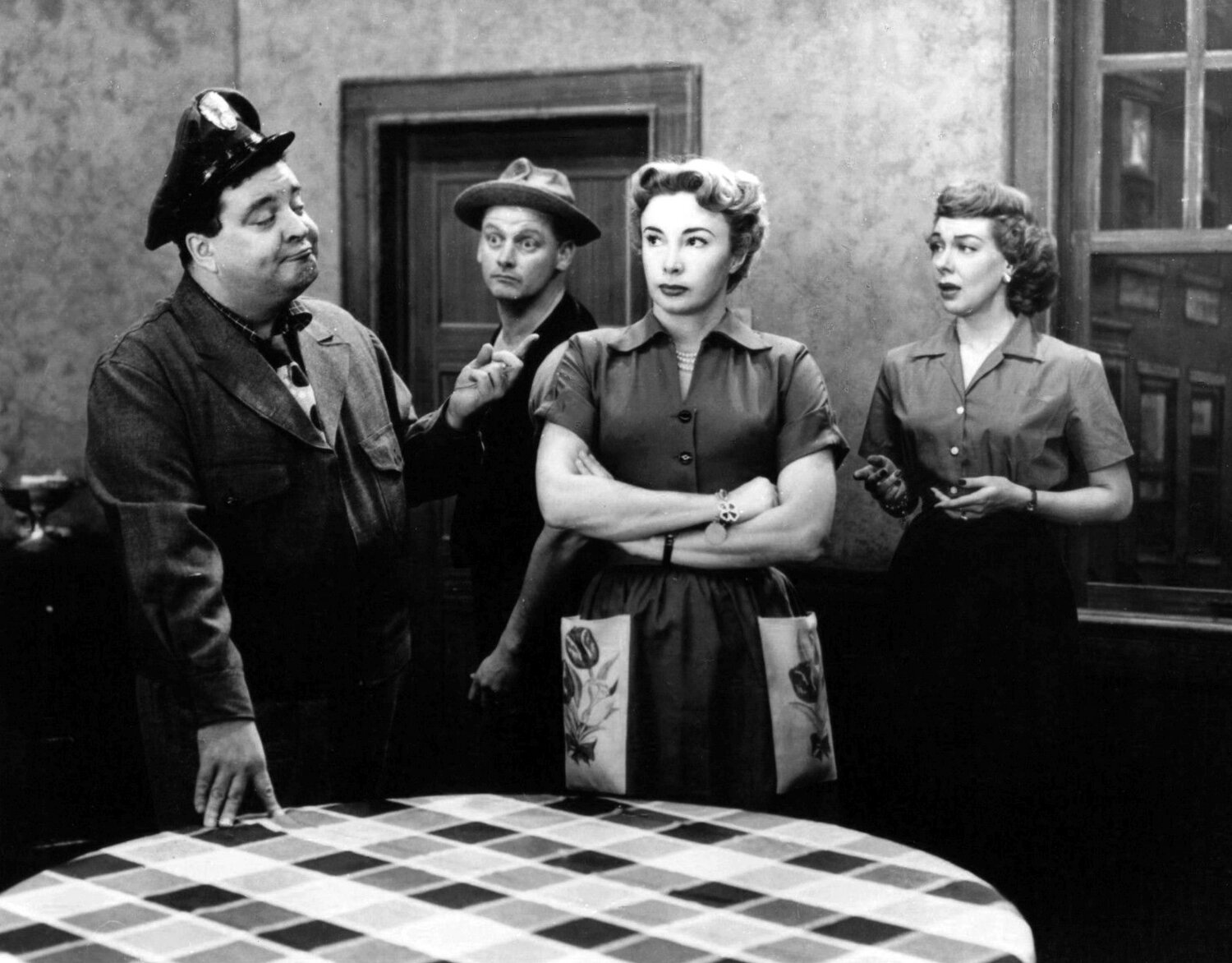
A relative recently asked me who was the most memorable person I ever interviewed in my 60 years as a reporter and editor. After thinking for a while, I answered, “Probably Jackie Gleason.” Young people today have most likely never heard of Jackie Gleason, but in the 1950s and ’60s he was as big — and unlikely — a TV/movie star as there was.
Born Herbert Walton Gleason Jr. (1916–1987), Jackie was a comedian, actor, writer and composer who immodestly referred to himself as “The Great One.” He developed a style and characters from growing up in Brooklyn, and was known for his outrageous visual and verbal comedy, exemplified by his city bus driver character Ralph Kramden in the TV series “The Honeymooners.” He also starred in the eponymous “The Jackie Gleason Show,” which maintained high ratings from the mid-1950s through 1970.
In 1981, I saw an item in a local newspaper about a Philadelphia area chapter of The Honeymooners Fan Club that planned to go to New York one weekend a year to socialize, exchange anecdotes about “The Honeymooners” and to meet personally with one of the stars or producers from the hit TV sitcom.
Since my wife and I were big fans of “The Honeymooners,” we contacted the group and went with them to New York. We all met with Joyce Randolph, who had played Trixie, the wife of Art Carney’s character, Ed Norton, a trash collector who lived in the same tenement as the Kramdens.
Randolph admitted she was not the first choice for Trixie. The first choice, Pert Kelton, was “blacklisted” after producers were informed of her alleged membership in the Communist Party in the 1930s.
After our luncheon, I told Randolph I was an entertainment columnist for a daily newspaper, the Philadelphia Journal, and that I would love to interview Jackie Gleason. She gave me the name and number of Gleason’s agent, and I was able to set up a phone interview.
I asked Gleason if he was in the military during World War II. “That was one time it paid off to be fat,” he said. “I got a notice from the draft board in Brooklyn, but when I showed up, I was rejected because I was more than 100 pounds overweight. It was probably a good thing that I was rejected. My weight would have sunk a ship on D-Day!”
Gleason said his father, Herb, and mother, “Maisie,” Irish-Americans, had an explosive marriage that affected him and his lone sibling, Clement, who died from complications of meningitis at age 14 in 1919.
Gleason said his father spent most of his time at home at the family’s kitchen table, writing insurance policies. On the night of Dec. 14, 1925, Gleason’s father permanently left his family and job at the insurance company. Once it became evident that he was not coming back, Maisie went to work as a subway attendant for the Brooklyn-Manhattan Transit Corp.
Gleason said he was 19 when his mother died in 1935 from complications of sepsis. He had nowhere to go and 36 cents to his name.
After his father abandoned the family, Gleason began hanging around with a local gang, hustling pool. He attended Bushwick High School in Brooklyn and became interested in performing after being part of a class play. He quit school before graduating and got a job as a theater emcee that paid $4 per night (the equivalent to about $100 today).
Other jobs he held at that time included pool hall worker, stunt driver and carnival barker. Gleason and his friends made the rounds of the local theaters. He put an act together with one of his friends, and the pair performed on an amateur night at the Halsey Theater.
Gleason said his father abused him and his mother and that he was glad when his father left. “He told me many times that I was a bum and that I would never amount to anything,” Gleason said. “This was fuel for my fire. I worked my butt off ever since then because I was determined to prove to him that I would amount to something. And I certainly did!”
Yes, he did. Gleason earned five Primetime Emmy Awards, three Golden Globe Awards, and a nomination for an Academy Award. Although he was known mostly for TV, Gleason had major movie roles, including his Oscar-nominated portrayal of Minnesota Fats in 1961’s “The Hustler” (co-starring Paul Newman) and playing Buford T. Justice in the “Smokey and the Bandit” trilogy from 1977 to 1983 (co-starring Burt Reynolds).
Although he had no training as a musician, Gleason also enjoyed a music career during the 1950s and 1960s, producing a series of bestselling “mood music” albums. His first album, “Music for Lovers Only,” still holds the record for the longest stay on the Billboard Top 10 Charts (153 weeks), and his first 10 albums sold over a million copies each. His recordings include more than 20 singles, nearly 60 long-playing record albums and more than 40 CDs.
Len Lear can be reached at lenlear@chestnuthilllocal.com.



