A Pennsylvania-based firm is assessing the possibility of installing a renewable energy system at John F. McCloskey Elementary School and the neighboring Dorothy Emanuel Recreation Center in Cedarbrook.
Philadelphia Gas Works (PGW) officials announced in October that they had hired Alderson Engineering to conduct a $500,000 geothermal site survey and feasibility study in partnership with the School District of Philadelphia. The firm has six months to carry out the study in collaboration with PGW, the school district, and the Philadelphia Parks & Recreation Department.
“We’re …
This item is available in full to subscribers.
You can also purchase this individual item for $1.50
We have recently launched a new and improved website. To continue reading, you will need to either log into your subscriber account, or purchase a new subscription.
If you are a digital subscriber with an active subscription, then you already have an account here. Just reset your password if you've not yet logged in to your account on this new site.
If you are a current print subscriber, you can set up a free website account by clicking here.
Otherwise, click here to view your options for subscribing.
Please log in to continue |
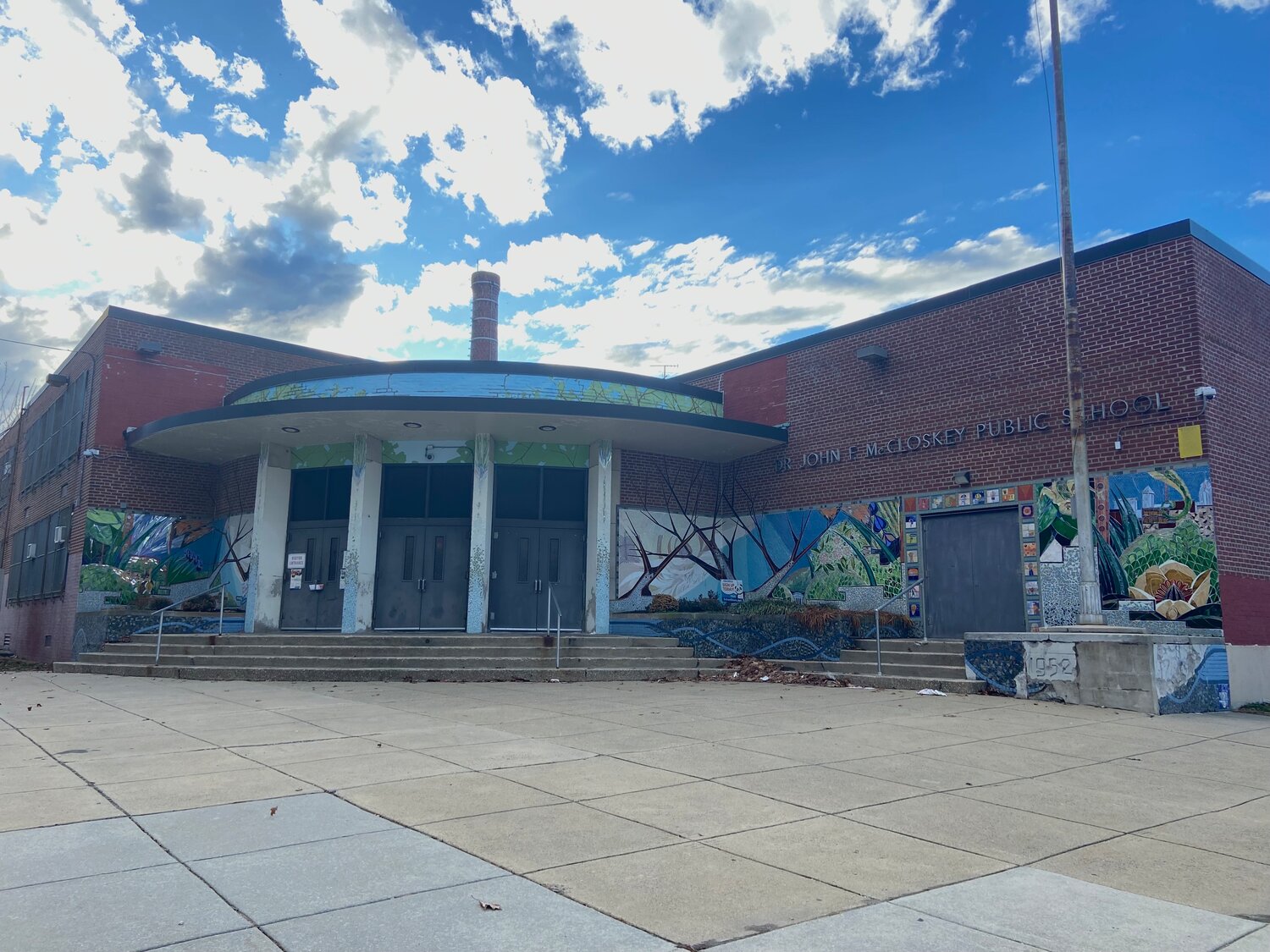


A Pennsylvania-based firm is assessing the possibility of installing a renewable energy system at John F. McCloskey Elementary School and the neighboring Dorothy Emanuel Recreation Center in Cedarbrook.
Philadelphia Gas Works (PGW) officials announced in October that they had hired Alderson Engineering to conduct a $500,000 geothermal site survey and feasibility study in partnership with the School District of Philadelphia. The firm has six months to carry out the study in collaboration with PGW, the school district, and the Philadelphia Parks & Recreation Department.
“We’re somewhere in the middle of the process. We’re working through lots of design and conceptual decisions about what this system will look like,” said Neal Babcock, principal engineer for Alderson, in December.
The firm is evaluating whether the two buildings can have a closed-loop geothermal system, which would support multiple heat pumps. Geothermal heat pumps use the Earth’s stable temperature to heat and cool buildings, rather than burn fossil fuels.
PGW and the school district are partnering on the project to support their respective clean energy goals.
“We are eager to work with the School District of Philadelphia and Alderson Engineering to explore ways to reduce emissions, offer cost-saving energy efficient options for customers, and sustain jobs,” Seth Shapiro, president of PGW, said in the October press release.
This wouldn’t be the first geothermal system installed in the Philadelphia school district. Kensington High School for the Creative and Performing Arts implemented a system in 2010, and Alderson Engineering was the mechanical and electrical engineer on that project.
For the current feasibility study, Alderson engineers are examining the geology of the area, where to place underground borings and how it would design the system. The Request for Proposals requires Alderson to produce 30% of design drawings and calculate cost estimates and environmental benefits. PGW did not provide an estimated budget for the installation.
The firm is also required to assess the environmental conditions of the buildings and mitigate any risks to public health and the environment. Asbestos is found in most Philadelphia public schools, including McCloskey, and the material can pose significant health risks when disturbed.
If the project is not feasible at McCloskey, the Request for Proposals directs Alderson to evaluate Lankenau Environmental Science Magnet High School in Upper Roxborough.
“I think it’s a great collaboration of big organizations in the region trying to take steps forward and consider their options,” Babcock said. “We’re excited to help them through that process.”
It’s unclear how long it will take the geothermal system to be installed if approved, Babcock said.
PGW told the Local that McCloskey was selected for the project because of its reliance on oil, aging heating system, available space for geothermal wells, its proximity to the Emanuel Recreation Center, as well as other criteria. McCloskey is also one of the dozens of schools in Philadelphia that lacks adequate air conditioning. District officials periodically have sent students home early because of the heat.
A spokesperson for McCloskey declined to comment for the story and directed the Local to the school district, which forwarded a statement from Oz Hill, deputy superintendent of operations for the School District of Philadelphia.
“By partnering with Philadelphia Gas Works to explore innovative energy solutions within our schools, we aim to provide clean and efficient heating and cooling options, enhance our school environment, reduce costs, and be part of a key initiative that helps pave the way for equitable, sustainable energy strategies that benefit all Philadelphians,” Hill said.
The exploration of geothermal technology is part of PGW’s efforts to grow revenue, expand its clean energy portfolio and lower its carbon emissions, PGW said in a March press release. Its commitment comes after years of pressure from climate and health groups for PGW to transition away from natural gas. In 2021, PGW released a study identifying ways to diversify its business model to reduce its carbon footprint, and geothermal was one of the options.
If this geothermal system is installed at McCloskey, the project could become a “model for future opportunities,” as PGW transitions towards clean energy, Shapiro said in the October release.
The study also supports the school district’s GreenFutures sustainability plan, which launched in 2016. The district is currently working on the second version of the plan to make the district cleaner and safer, according to its website.
Many closed-loop geothermal systems circulate water or another fluid through underground pipes to heat and cool homes, according to the U.S. Department of Energy. Geothermal heat pumps take advantage of the ground’s constant year-round temperature and its ability to store thermal energy, absorbing excess heat in the summer and emitting heat in the winter.
The stable temperature of the ground makes the system more efficient than traditional systems, Babcock said.
Geothermal systems often have higher upfront costs and require more space to install than conventional systems, Babcock said. But owners can recoup these investments by saving more on energy costs, as geothermal heat pumps use significantly less electricity.
Abby Weiss is an environmental reporter for the Local and a Report for America corps member. She can be reached at abby@chestnuthilllocal.com.



